

Condo vs. Townhome Living in Denver: Which Builds Equity Faster?
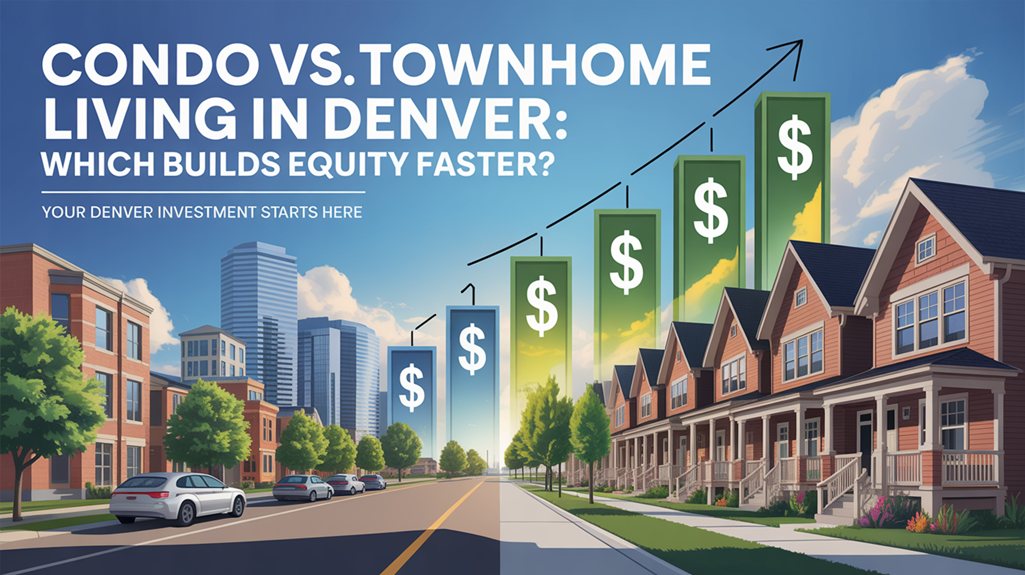
I get this question a lot — usually after a buyer falls for a downtown condo’s walkability, then compares it to a townhome a few miles east with a small yard and no shared walls. On paper, both look solid. But in Denver, the way each builds equity has less to do with finishes and more to do with structure — literally and financially. How the HOA’s reserves are managed, whether the building is Fannie Mae warrantable, how insurance deductibles are split after hail, and whether your land is fee-simple or fractional all shape long-term return.
So, let’s talk through what actually drives equity here — not theory, but what I see after years of selling and owning in this market.
How Equity Really Builds Over Time in Denver
In practice, most of the wealth Denver owners build doesn’t come from flashy appreciation headlines — it comes quietly, month by month, as debt gets paid down and liquidity stays intact when you resell. Appreciation amplifies that process, but the equity curve depends just as much on how easy it is to sell when you’re ready. Liquidity is where condos and townhomes diverge most.
In other words, you’re not betting on price alone — you’re betting on how your future buyer will feel about your HOA, your lender’s project approval, and the ease of ownership day to day.
How Equity Behaves in Denver Real Estate
Equity isn’t just about appreciation — it’s about how easily the next buyer can step into your shoes. That depends on three things: financing accessibility, building health, and perceived livability. In Denver, these play out differently for condos and townhomes.
Condos in Capitol Hill, Golden Triangle, or LoDo often carry the biggest convenience premium. You can walk to Trader Joe’s, Cheesman Park, or Union Station, and most buildings handle exterior maintenance. But buyers — and lenders — scrutinize those HOAs. If a building’s reserve study shows deferred elevator work or thin budgets, equity can flatline until it’s addressed.
By contrast, townhomes in Central Park, Sunnyside, or Lowry appreciate more like detached homes because you own the land underneath. That land interest gives lenders and future buyers confidence, especially as Denver’s citywide ADU policy continues to push value toward fee-simple properties with more flexibility.
The Financing Filter: Warrantability and Liquidity
When you buy a condo, your lender underwrites two things — you and the project. After the Surfside collapse, agencies like Fannie Mae tightened standards on what they call “critical repairs.” If your building has any open structural issues or pending assessments, it may be tagged as “ineligible.” That label cuts the buyer pool and slows resale velocity until repairs are done.
Townhomes rarely hit that roadblock because they’re fee-simple. You control the roof, siding, and foundation — not a shared HOA board. That autonomy can mean more maintenance, but it also removes one big uncertainty that keeps lenders cautious.
I once had a client in LoHi whose roof work was delayed two months waiting on a board vote. That delay caused their buyer’s lender to pull the loan until the repair finished — the kind of real-world hiccup that keeps me pushing buyers to ask about project maintenance timing early.
HOA Culture and Cash Flow — The Quiet Equity Killer
Denver owners have learned the hard way that “low dues” aren’t always a deal. After several back-to-back hail years, many HOAs raised deductibles or passed special assessments to fund roof replacements. According to the Colorado Division of Insurance, master-policy deductibles across the Front Range have climbed significantly since 2019. I’ve seen $8,000 surprise bills in otherwise healthy buildings — and those moments ripple through resale data because buyers talk, and appraisers read HOA minutes.
Colorado’s HB22-1137 now requires better notice on HOA hearings, fines, and financial disclosures. That transparency has helped buyers make more informed decisions — but it also means every line item in an HOA budget can now influence perceived risk and price.
The strongest condo projects I’ve sold in — like those near Cheesman Park or Riverfront — all share the same pattern: steady dues, clear communication, and solid reserves. It’s not glamour that protects equity here; it’s governance.
Insurance and Exposure: Who Really Pays When Hail Hits
With Colorado’s hail risk, insurance matters more than buyers realize. In a condo, the HOA carries a master policy for the structure, while you carry an HO-6 for interiors and loss assessments. If the master policy has a massive deductible — say, $50,000 per claim — that cost gets divided among owners when storms roll through. That’s where loss-assessment coverage saves you. Townhome owners, on the other hand, use standard homeowner policies because they own exterior components. Premiums are higher but predictable.
I always tell clients: check the master policy deductible before you go under contract. It’s one of the easiest ways to spot whether a building is being responsibly managed.
Market Behavior: What Buyers Value Now
After 2020, buyers started treating HOA documents almost like inspection reports. They want to know about pet limits, rental caps, even composting compliance under Denver’s “Waste No More” ordinance. Smart sellers have begun providing updated reserve studies up front — it’s a quiet but powerful trust signal that protects value.
Townhome communities are also adapting, forming lighter-touch HOAs that manage shared drives without taking on full building risk. That balance — just enough structure to keep things tidy, not enough to slow financing — tends to age well in this market.
For anyone browsing Denver condos and townhomes for sale right now, pay attention to how transparent each community is about its finances. The most open boards often produce the most stable resale values.
Neighborhood Rhythms: Where Each Type Fits Best
Condos thrive where walkability sells itself. Downtown, LoHi, and Golden Triangle still pull strong appreciation because lifestyle value outweighs the HOA overhead. Buyers there trade yard space for rooftop views and elevator convenience.
Townhomes do better where buyers crave space and control. In Central Park and Sloan’s Lake, I’ve watched attached row homes outperform nearby condos thanks to garages, private entries, and predictable maintenance. The ADU conversation only amplifies that advantage — buyers see future utility in owning dirt.
Still, great condos outperform weak townhomes all day long. The key is transparency — strong reserves, responsive management, and consistent upkeep. You can feel it when you walk into a lobby that smells clean and has current elevator inspections posted.
So, Which Builds Equity Faster?
It depends on the levers you can control. When the building’s finances are clear, the HOA is proactive, and lending is open, condos in prime Denver corridors can appreciate quickly — especially those with stable reserves and lifestyle pull. But if the HOA is underfunded or non-warrantable, that same condo can lag for years.
Townhomes tend to win the slow-and-steady race. They don’t spike like trendy downtown buildings, but they hold ground during market corrections because they behave more like detached homes — less communal risk, more tangible ownership.
The truth is, both can build wealth here. The edge goes to whichever one you understand — and maintain — better than the average owner.
If you’re comparing condos for sale in Denver with townhomes for sale in Denver, take the time to read the HOA budget, reserve study, and insurance matrix before you fall in love with the view. That’s where equity really hides. Need guidance on this? Reach out and we will help you through it.

Ready to find your dream home in Denver?
We can help! Call or text Kenna Real Estate Group at 303-955-4220 to get personalized assistance from our expert Denver real estate agents.
What’s the simplest way to think about condo vs. townhome equity in Denver?
Townhomes are usually fee-simple (you own the land + structure), so they tend to track closer to single-family appreciation and are easier for lenders to underwrite. Condos are air-space ownership tied to shared elements; equity depends more on the building’s health, reserves, and lender project approval (“warrantability”). Liquidity at resale is the swing factor for both.
What makes a Denver condo non-warrantable, and why does that hurt equity?
A project can be flagged if there’s significant deferred maintenance, “critical repairs,” heavy commercial space, low owner-occupancy, or special-assessment stress. Non-warrantable buildings don’t meet Fannie Mae/Freddie Mac standards, shrinking the buyer pool to cash/portfolio loans and slowing appreciation until issues are cured.
How do I size up HOA “health” quickly before I fall in love with the unit?
Ask for the current budget, reserve study/disclosures, master insurance summary (including deductible), last 12–24 months of board minutes, and any pending special-assessment notices. Colorado’s transparency rules (see HB22-1137) improve access, so use them. You’re looking for steady dues, realistic reserves, and no “critical repair” red flags.
Do “low HOA dues” help equity?
Only if reserves are still adequate. Ultra-low dues with thin reserves often lead to special assessments later, which can spook lenders and buyers. Stable dues + funded reserves typically protect values better than artificially low dues that defer necessary work.
How do insurance and hail risk play into condo vs. townhome equity?
Condos rely on an HOA master policy; owners carry an HO-6 for interiors, liability, and loss-assessment coverage to help with shared deductibles. Townhomes (fee-simple) use homeowner policies covering exterior components. Along the Front Range, master deductibles have trended higher in recent years (see Colorado Division of Insurance), so always verify the deductible—it’s a direct line to potential assessments.
Can I use FHA or VA on a Denver condo that isn’t on an approval list?
Sometimes. FHA offers a single-unit “spot” approval pathway when a project isn’t fully approved, provided the HOA and unit meet criteria (budget, reserves, insurance, owner-occupancy, rental caps). Expanded financing options support liquidity and, by extension, equity.
Does Denver’s citywide ADU policy tilt the equity math toward townhomes?
Indirectly. Citywide ADUs emphasize the value of fee-simple land and future use flexibility. Most condos won’t qualify. That narrative can nudge demand—and long-run equity—toward properties with land utility. See the city’s ADU guidance via Denver CPD.
Which rules inside an HOA hit resale values the hardest?
Frequent deal-shapers include rental caps, pet limits (breed/weight), parking rules, and any restrictions that complicate lender approval (e.g., litigation, inadequate reserves). Small frictions compound into fewer offers and longer days on market—an equity drag.
How should I compare comps between a condo and a townhome in the same neighborhood?
Normalize for ownership type and carrying costs. For condos, weigh HOA dues against what they replace (roof, exterior, amenities). For townhomes, factor private yard/garage, fee-simple land, and individual insurance/maintenance. Adjust for liquidity: warrantable projects and fee-simple homes typically resell faster at similar price points.
Do property taxes differ between condos and townhomes in Denver?
Colorado taxes are based on assessed value and class, not on whether the home is a condo or townhome. What changes is the value trajectory and market liquidity of each asset type, which indirectly influences your total carrying cost over time.
Is there a “best season” to sell a Denver condo vs. a townhome for equity?
Seasonality exists, but building health and financing access outweigh the calendar. A well-documented condo with clean reserves can outperform a poorly run project in peak season. Townhomes with garages and private entries show consistently well year-round because the buyer pool overlaps with single-family shoppers.
What’s the one document that most reliably signals future equity risk?
The combination of the reserve study (or reserve disclosures) and the master insurance summary with deductible. Together, they telegraph whether major work is funded and how costs get shared. For condos, pair that with confirmation of project eligibility to understand lender appetite—your future liquidity.
View the Latest Denver Condos and Townhomes for Sale

 Iconique Real Estate, LLC
 Real Broker, LLC Dba Real
 Colorado And Company Real Estate, Inc
 Trelora Realty, Inc.
 Coldwell Banker Global Luxury Denver
 Rocky Mountain Real Estate Inc
 Anjoy Realty, LLC
 Douglas Real Estate
 Your Castle Real Estate Inc
 Espi Agency, L.L.C.
 RE/MAX Professionals
 Iconique Real Estate, LLC
 Liv Sotheby's International Realty
 Black Crown Real Estate
 Kittle Real Estate
 Kittle Real Estate
 Denver Rental
 Your Castle Real Estate Inc
 Compass - Denver
 Metro 21 Real Estate Group
 Your Castle Real Estate Inc
 Zakhem Real Estate & Property Management
 Better Homes And Gardens Real Estate Neuhaus
 Kittle Real Estate
 Kittle Real Estate
 Iconique Real Estate, LLC
 Denco Property Mgmt & Sales
 Compass - Denver
 Real Estate Solutions
 Rex Homes LLC
 Fantastic Frank Colorado
 RE/MAX Professionals
 City2summit Realty
 City Lights Denver
 Coldwell Banker Realty 24
Properties displayed may be listed or sold by various participants in the MLS,” as established by the applicable MLS Governing Documents.
The content relating to real estate for sale in this web site comes in part from the Internet Data eXchange ("IDX") program of METROLIST INC® Real estate listings held by brokers other than The Kenna Real Estate group are marked with the IDX Logo. This information is being provided for the consumers' personal, non-commercial use and may not be used for any other purpose. All information subject to change and should be independently verified. Click here for the full Terms of Use

Post a Comment